
Door Ding Repair
Contact Us Today
Get Your Evaluation & Quote
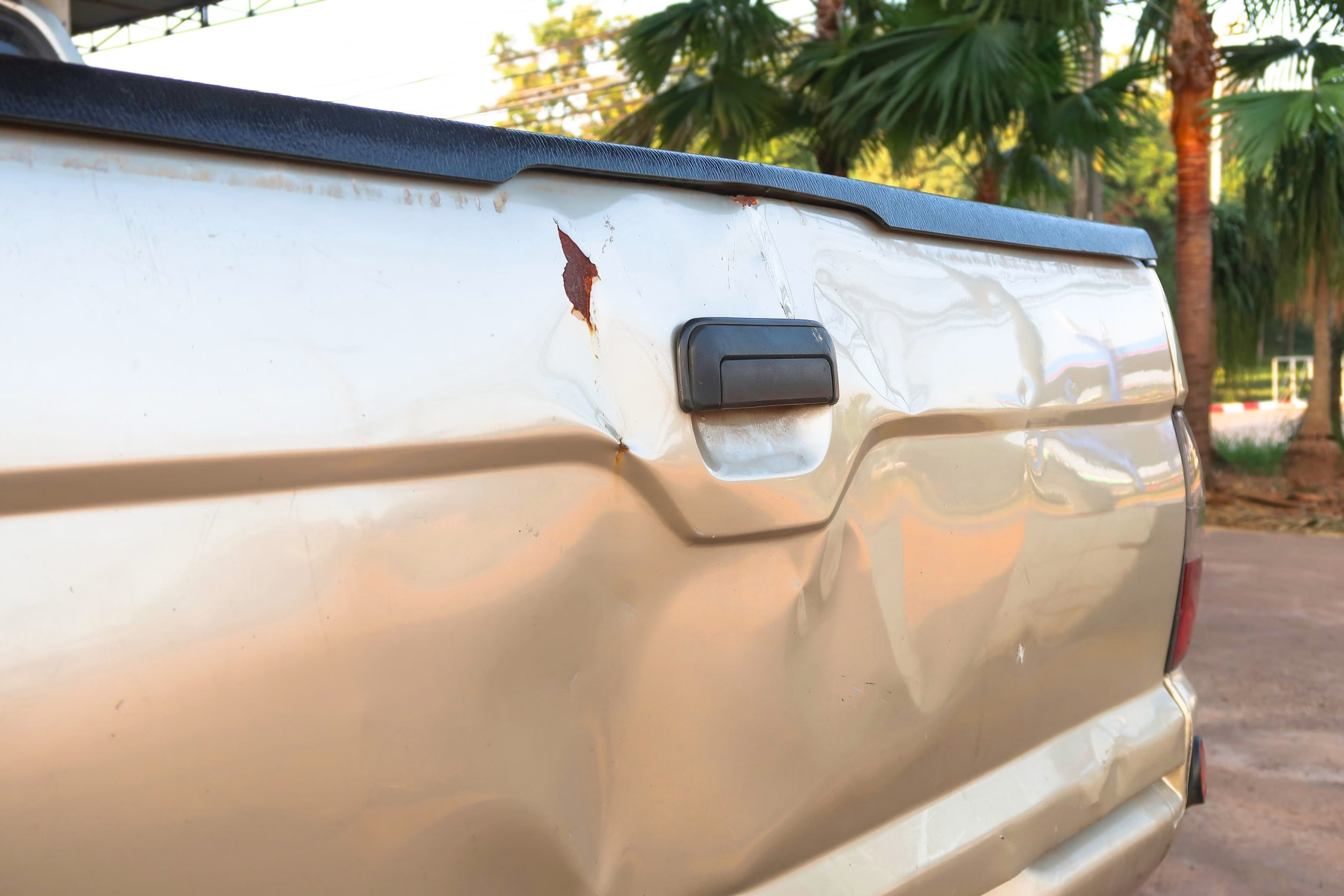
A door ding can happen in an instant. One careless parking-lot impact, shopping cart, or nearby car door can leave a noticeable dent on an otherwise clean vehicle. Fortunately, many small door dings can be repaired without traditional bodywork or repainting.
Door ding repair through Paintless Dent Repair (PDR) is designed to carefully restore suitable dents while preserving the vehicle’s existing finish. Dings & Dents of Conway specializes in PDR and states that many door dings can be repaired using this method.
Service We Provide
Aluminum Bedside Repair , Auto Scratch Repair , Body Shop Collision Repair , Bumper Repair
What Is a Door Ding?
A door ding is typically a small dent caused when another vehicle’s door, a shopping cart, or another object strikes the side of your vehicle.
Unlike major collision damage, a door ding is often limited to a small area of the exterior door panel. The paint may remain intact even though the metal has been pushed inward.
That combination can make a door ding a good candidate for Paintless Dent Repair. Instead of automatically sanding, filling, and repainting the panel, PDR focuses on carefully restoring the damaged metal.
Can a Door Ding Be Repaired Without Repainting?
In many cases, yes. Paintless Dent Repair can be an appropriate solution when the original paint remains intact and the damage falls within the practical limits of PDR.
The technician evaluates the dent before determining whether paintless repair is suitable. The location, depth, shape, panel material, paint condition, and access behind the dent can all affect the repair approach.
When PDR is appropriate, the goal is to restore the panel while keeping the original finish in place.
Dings & Dents of Conway specifically lists door dings among the types of dents that can often be repaired using PDR.
Why Paintless Dent Repair Works Well for Door Dings
Door dings are often relatively localized compared with larger collision damage. When the metal has not been severely stretched and the paint is still intact, a technician may be able to carefully manipulate the panel back toward its original shape.
PDR does not rely on automatically replacing or repainting the entire panel. Instead, the repair focuses on the existing metal.
This can be especially useful for vehicle owners who want to avoid unnecessary refinishing when the original panel and paint are otherwise in good condition.
The original factory finish is also one of the reasons the business gives for using PDR.
What Makes a Door Ding a Good Candidate for PDR?
Not every door ding is identical. Before beginning a repair, the damage should be evaluated individually.
Factors that can make a door ding more suitable for PDR include:
- The original paint is still intact.
- The dent is relatively shallow.
- The metal has not been severely stretched.
- The damage is away from a difficult panel edge.
- The dent can be accessed safely from behind the panel.
- There is no major collision damage surrounding the ding.
A small dent is not automatically easy to repair. A sharply creased ding or damage located directly along a strong body line can require more precision than a shallow dent on an open section of the door.
The best way to know whether your specific ding can be repaired is to have the damage evaluated.
What Can Make Door Ding Repair More Difficult?
The location and condition of a dent can matter just as much as its size.
A ding near a body line, panel edge, reinforcement, handle, or other internal component may require a different approach. Damage that has cracked or chipped the paint can also fall outside the ideal conditions for a paintless repair.
Previous bodywork can be another consideration because repaired or refinished panels may respond differently than an original panel.
For these reasons, an experienced technician should inspect the actual damage rather than determining the repair method based solely on a photograph or the apparent size of the dent.
How Door Ding Repair Works
1. Inspect the Ding
The repair begins by examining the damaged area. The technician considers the shape, depth, location, paint condition, panel material, and access to the back of the panel.
2. Determine Whether PDR Is Appropriate
If the damage is suitable for PDR, the technician can plan how to reach and work the damaged area. If the damage falls outside the practical limits of PDR, another repair option may be recommended.
3. Carefully Restore the Panel
Paintless Dent Repair uses specialized tools and controlled pressure to gradually move the damaged metal back toward its original shape.
The process requires careful control rather than simply pushing the dent outward. The objective is to restore the panel’s contours without creating additional high spots or distortion.
4. Check the Finished Panel
Once the repair is completed, the area should be examined from different angles to make sure the panel has been properly restored.
Door Ding Repair vs. Traditional Body Repair
Traditional body repair can involve processes such as sanding, filling, refinishing, or replacing damaged components. Those methods remain important when a vehicle has damage that cannot reasonably be addressed with PDR.
For a suitable door ding, however, PDR provides another option.
The key difference is that PDR attempts to restore the existing panel without automatically introducing new paint or body filler.
That can make PDR particularly appealing when the damage is cosmetic, the paint is intact, and the panel can be safely accessed.
What If the Door Ding Is Too Severe for PDR?
Not every dent can be repaired using Paintless Dent Repair.
If the impact has caused significant deformation, damaged the paint, or created damage beyond the practical limits of PDR, conventional body repair may be more appropriate.
Dings & Dents of Conway states that when damage is beyond the scope of PDR, it can work with body shops for conventional repairs and combine PDR with other repair methods when appropriate.
The important thing is to select the repair method based on the actual condition of the vehicle rather than forcing every dent into the same repair process.
Mobile Door Ding Repair
For customers who prefer not to take their vehicle to a repair facility, Dings & Dents of Conway also offers mobile repairs.
The business states that many repairs can be completed from the comfort of the customer’s home and notes that a garage, carport, or suitable shaded area can provide an appropriate working environment.
Whether a particular door ding can be repaired through mobile service depends on the damage and working conditions.
Common Causes of Door Dings
Door dings can occur in many everyday situations, including:
- Another vehicle’s door striking your car in a parking lot
- Shopping carts contacting the side of your vehicle
- Tight parking spaces
- Minor impacts in garages or driveways
- Objects contacting the side of a parked vehicle
- Small impacts while loading or unloading items
Because these incidents are usually sudden and localized, the damage may be easy to overlook until sunlight or reflections make the dent more visible.
Should You Repair a Small Door Ding?
A small door ding may not affect how the vehicle drives, but that does not mean it needs to remain there permanently.
Having the damage evaluated can help you understand whether PDR is a practical option. This is particularly useful if you want to preserve the vehicle’s existing appearance and avoid unnecessary bodywork.
The decision should be based on the condition of the damage, the repair method available, and the result you want from the repair.
Frequently Asked Questions
How much does door ding repair cost?
The cost depends on the individual damage. Factors can include the size and depth of the ding, its location, the type of panel, paint condition, and how accessible the damaged area is. Dings & Dents of Conway does not publish a standard door-ding price on its website, so an individual evaluation is appropriate.
Can PDR fix a door ding?
Many door dings can be repaired using Paintless Dent Repair when the damage falls within the practical limits of PDR. Dings & Dents of Conway specifically lists door dings among the types of damage it repairs with PDR.
Will door ding repair require repainting?
Not necessarily. When a door ding is suitable for PDR and the original paint remains intact, the repair can be performed without conventional repainting. More severe or paint-damaged dents may require a different repair method.
Can a door ding be repaired if the paint is chipped?
Paint damage can change the repair options. PDR may still be useful for addressing the metal deformation, but additional refinishing may be necessary depending on the condition of the paint. The vehicle should be evaluated before selecting a repair method.
Can a crease in a door be repaired?
Some crease dents can be repaired with PDR. Dings & Dents of Conway specifically states that crease dents, along with door dings and larger dents, can often be repaired using PDR.
Can you repair a door ding at my home?
Dings & Dents of Conway offers mobile repairs and states that many repairs can be completed at a customer’s home. A suitable working environment, such as a garage, carport, or shaded area, may be needed.
What if my door ding cannot be repaired with PDR?
If the damage is beyond the scope of PDR, conventional body repair may be appropriate. Dings & Dents of Conway states that it works with body shops when repairs require conventional bodywork in addition to PDR.
Get Your Door Ding Evaluated
A door ding does not automatically mean that your vehicle needs sanding, filler, or a complete repaint. If the paint is intact and the damage is suitable, Paintless Dent Repair may provide a way to restore the panel while preserving the existing finish.
Dings & Dents of Conway provides Paintless Dent Repair and mobile dent repair and specifically identifies door dings as a type of damage that can often be addressed through PDR.
If your vehicle has a parking-lot ding or small door dent, contact Dings & Dents of Conway to discuss the damage and determine the appropriate repair option.