Car Dent Repair
Contact Us Today
Get Your Evaluation & Quote
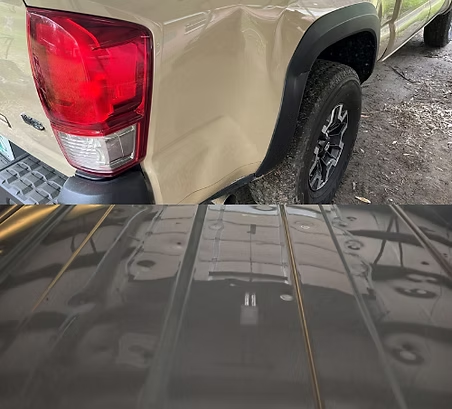
A dent in your car can happen in seconds, whether it comes from a parking lot door, a minor collision, hail, or another impact. The right repair depends on the size, depth, location, and condition of the damaged panel. Car dent repair can range from Paintless Dent Repair (PDR) for suitable damage to conventional body repair when the panel or finish requires more extensive work.
Dings & Dents of Conway specializes in Paintless Dent Repair and mobile dent repair, with more than 30 years of experience in the PDR field according to the business website. When PDR is not appropriate for the damage, the business also works with body shops for repairs that go beyond the scope of paintless dent removal.
Service We Provide
Aluminum Bedside Repair , Auto Scratch Repair , Body Shop Collision Repair , Bumper Repair
What Is Car Dent Repair?
Car dent repair is the process of restoring a vehicle panel after it has been pushed, creased, or otherwise damaged. The repair method depends on the condition of the metal or other material, whether the original paint remains intact, and how accessible the damaged area is.
For suitable dents, Paintless Dent Repair can reshape the panel without repainting it. This approach is particularly useful when the original factory finish is still intact and the damage can be accessed and carefully worked back into its proper shape.
Other damage may require conventional body repair. In those situations, the damaged area may need additional bodywork, refinishing, or replacement depending on the severity of the damage.
What Types of Dents Can Be Repaired?
Not every dent requires the same repair process. An inspection helps determine which approach makes sense for the vehicle.
Common types of damage that may be evaluated include:
- Door dings from parking lots or nearby vehicles
- Small to medium dents
- Larger dents that may still be suitable for PDR
- Creases in body panels
- Hail-related dents
- Dents involving aluminum panels
- Certain bumper dents or damage
- Collision-related damage that may require both PDR and conventional repair
The website specifically notes that door dings, crease dents, and large dents can sometimes be repaired using PDR. The actual repair method depends on the individual damage.
Paintless Dent Repair vs. Traditional Dent Repair
Paintless Dent Repair is different from conventional body repair because it focuses on reshaping the existing panel rather than automatically replacing or repainting it.
When the original paint is intact and the dent is suitable for PDR, the process can preserve the vehicle’s factory finish. This can be an important consideration for owners who want to correct cosmetic damage without unnecessarily refinishing an otherwise undamaged panel.
Traditional repair may be more appropriate when the damage is beyond the practical limits of PDR. Severe deformation, damaged paint, or other structural or body-panel concerns can require a different repair approach.
The goal is not simply to choose one repair method for every dent. The important step is determining which method is appropriate for the specific damage.
How the Car Dent Repair Process Works
1. Inspect the Damage
The first step is evaluating the dent. The size, depth, location, panel material, paint condition, and accessibility can all influence the repair approach.
2. Determine the Appropriate Repair Method
If the damage is suitable for Paintless Dent Repair, the panel can be carefully manipulated back toward its original shape. If PDR is not appropriate, conventional body repair may be considered.
Dings & Dents of Conway also describes a Push For Paint (PFP) method for certain aluminum bedside and roof-panel repairs.
3. Complete the Repair
The selected repair method is performed according to the condition of the vehicle. With PDR, the objective is to gradually restore the panel while maintaining the existing finish.
4. Inspect the Finished Area
The repaired area should be checked to make sure the dent has been properly addressed and the panel has been restored as closely as practical to its previous condition.
Serving Conway and Surrounding Communities
When Should You Consider Dent Repair?
A dent may seem like a minor cosmetic problem, but leaving visible damage unrepaired is not always the best choice.
Consider having the damage evaluated when:
- A dent is clearly visible from multiple angles.
- A door ding affects the appearance of your vehicle.
- Hail has left multiple dents across the body.
- A crease has formed in a body panel.
- A dent has affected the shape of a panel.
- You are unsure whether PDR or conventional repair is appropriate.
- You want to understand your repair options before authorizing bodywork.
If you have an insurance estimate for hail or collision damage, Dings & Dents of Conway recommends bringing the estimate when discussing repair options.
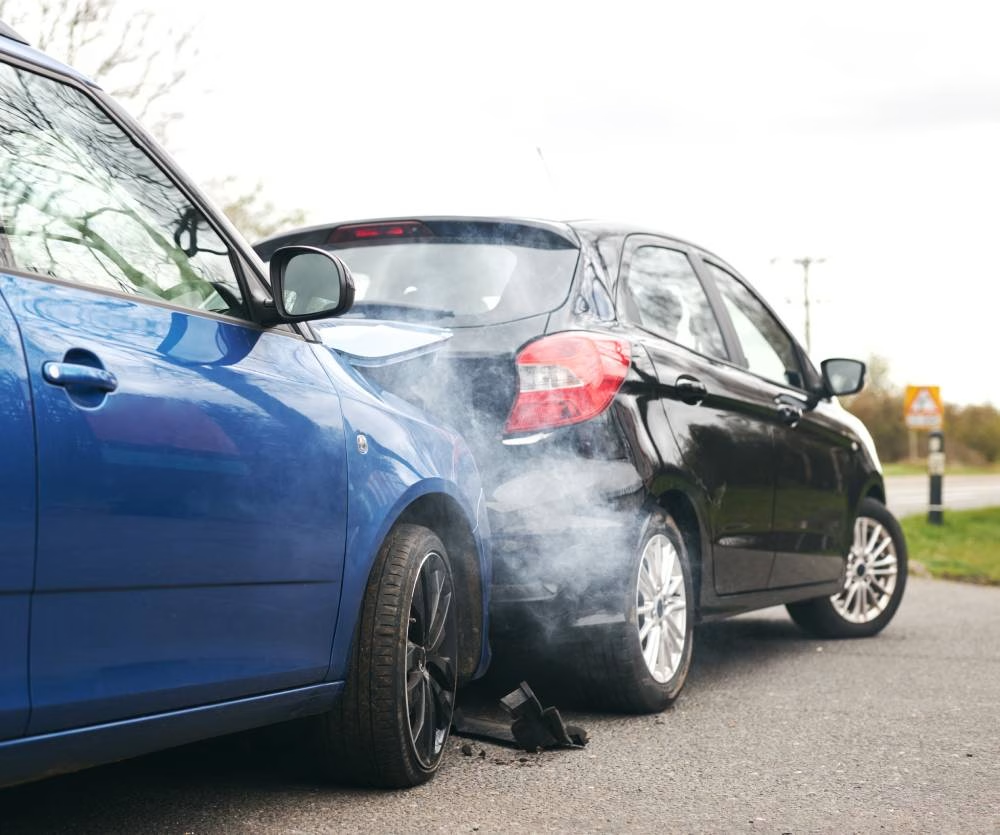
Why Preserving the Original Finish Can Matter
Your vehicle’s original paint finish is an important part of its appearance. When a dent can be repaired without repainting, Paintless Dent Repair can provide an alternative to conventional refinishing.
The Dings & Dents of Conway website explains that PDR can maintain the vehicle’s original factory finish when the damage is suitable for the process.
That does not mean every dent can or should be repaired with PDR. The condition of the panel and paint must be considered before choosing the repair method.
Mobile Car Dent Repair
Some dent repairs can be completed at the customer’s location. Dings & Dents of Conway describes its mobile repair service as an option for many repairs that can be performed from the comfort of the customer’s home.
For mobile work, the business notes that having a garage, carport, or suitable shaded area can be helpful.
Mobile service can be particularly convenient when a vehicle has a smaller dent that can be repaired without requiring the customer to leave the vehicle at a repair facility.
[BUTTON: Contact Dings & Dents]
Hail Damage and Car Dent Repair
Hail can leave multiple dents across a vehicle’s hood, roof, trunk, doors, and other panels. Because hail damage can involve many individual dents, an appropriate repair strategy is important.
Dings & Dents of Conway offers hail damage repair and states that customers can bring their insurance estimate when discussing repairs.
Before authorizing repairs, make sure the repair provider has evaluated the actual damage and explained which portions can be addressed through PDR or another repair method.
What If the Dent Is Too Severe for PDR?
Not every dent can be repaired with Paintless Dent Repair.
When damage extends beyond the practical scope of PDR, conventional body repair may be necessary. Dings & Dents of Conway states that it has worked with body shops and can combine PDR with conventional repairs when appropriate.
This approach can be useful when different parts of the same vehicle require different repair techniques.
Frequently Asked Questions
How do I know if my car dent can be repaired with PDR?
The best way to determine whether PDR is appropriate is to have the damage evaluated. The size and depth of the dent, its location, the condition of the paint, the type of panel, and access to the back of the damage can all affect the repair method.
Can large dents be repaired with Paintless Dent Repair?
Some larger dents can be repaired using PDR. Size alone does not determine whether PDR is possible. The overall condition and location of the damage must also be considered.
Can a door ding be repaired without repainting?
A door ding may be a good candidate for PDR when the original paint remains intact and the damage is suitable for paintless repair. An inspection is needed to determine whether that approach is appropriate.
What about hail damage?
Hail damage can often involve multiple dents across a vehicle. Dings & Dents of Conway provides hail damage repair and recommends bringing an insurance estimate when discussing the damage.
Can aluminum panels be repaired?
Certain aluminum damage can be addressed using specialized repair methods. Dings & Dents of Conway specifically offers aluminum bedside repair for light to medium collision damage and describes a Push For Paint method for certain aluminum or regular roof panels.
What happens if PDR cannot repair my vehicle?
If the damage is beyond the scope of PDR, a conventional body repair may be appropriate. Dings & Dents of Conway states that it works with body shops for repairs requiring a combination of PDR and conventional bodywork.
Can dent repair be performed at my home?
Some repairs can be completed through mobile service. The business states that many repairs can be performed at a customer’s home when a suitable working environment is available.
Get Your Car Dent Evaluated
A dent does not automatically mean that a panel needs to be replaced or repainted. The appropriate repair depends on the actual condition of the vehicle.
Dings & Dents of Conway provides Paintless Dent Repair, mobile dent repair, hail damage repair, aluminum panel repair, bumper repair, and assistance with damage that requires conventional body repair.
If your vehicle has a dent, ding, crease, or hail damage, contact Dings & Dents of Conway to discuss the damage and determine the appropriate next step.