
Truck Dent Repair
Contact Us Today
Get Your Evaluation & Quote
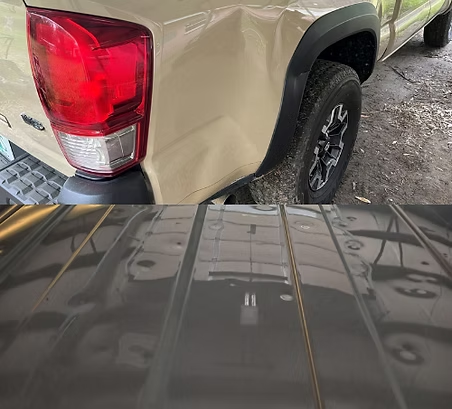
Trucks are built for demanding work, but that does not make them immune to dents. Parking-lot impacts, hail, road debris, equipment, loading areas, and everyday use can leave dents across doors, fenders, bedsides, and other exterior panels.
Truck dent repair can often be handled with Paintless Dent Repair (PDR) when the damage is suitable and the original paint remains intact. Dings & Dents of Conway specializes in PDR and has more than 30 years of experience in the field.
Whether your pickup has a small door dent or a more noticeable dent in a truck panel, the first step is determining the extent of the damage and choosing the repair method that fits the vehicle.
Service We Provide
Little Rock Arkansas , North Little Rock Arkansas , Maumelle Arkansas , Sherwood Arkansas
What Is Truck Dent Repair?
Truck dent repair is the process of restoring a damaged truck panel to its proper shape and appearance.
A truck can develop dents in many different areas, including:
- Truck doors
- Front and rear fenders
- Bedside panels
- Tailgates
- Quarter panels
- Roof panels
- Hood panels
- Aluminum panels
- Other accessible exterior body panels
The appropriate repair method depends on the size, depth, location, material, and condition of the damaged panel.
For many minor and moderate dents where the paint has remained intact, Paintless Dent Repair can be an effective option.
Can Paintless Dent Repair Fix Truck Dents?
In many cases, yes. Paintless Dent Repair is designed to restore suitable dents without disturbing the vehicle’s original paint finish.
The technician carefully evaluates the damage before determining whether PDR is appropriate. Access behind the panel, the severity of the dent, the condition of the paint, and the amount of metal deformation can all affect the repair.
Dings & Dents of Conway states that many dents, including larger dents, can be repaired using PDR when the damage is suitable for the process.
Common Types of Truck Dents
Door Dents
Truck doors can be damaged by other vehicles, shopping carts, equipment, or objects in tight spaces. Smaller door dents may be suitable for PDR when the paint remains intact.
Bedside Dents
Truck beds and bedsides can take significant abuse during loading, unloading, towing, and everyday work. Depending on the material and severity of the damage, PDR or another repair method may be appropriate.
Fender Dents
Front and rear fenders can develop dents from parking-lot impacts, road debris, minor collisions, or other incidents. A technician can evaluate the panel to determine whether paintless repair is practical.
Tailgate Dents
Tailgates can be damaged when objects are loaded into the bed or when another vehicle or object makes contact with the rear of the truck.
Hail Dents
Hail can create multiple dents across a truck’s hood, roof, doors, bed, and other panels. PDR is commonly used to address suitable hail damage while preserving the original finish.
Why Consider PDR for Your Truck?
Paintless Dent Repair can provide several advantages when the damage qualifies.
Preserve the Original Finish
PDR works with the existing panel rather than automatically requiring sanding, filler, and repainting. This can help preserve the truck’s original factory finish.
Avoid Unnecessary Bodywork
A suitable dent does not always require conventional body repair. PDR provides another option when the metal can be restored without traditional refinishing.
Maintain the Appearance of Your Truck
A noticeable dent can make an otherwise well-maintained truck look worn or neglected. Removing dents can restore a cleaner and more finished appearance.
Useful for Work Trucks
For trucks used for work or business purposes, keeping the vehicle presentable can be especially important. A clean exterior can help maintain a professional appearance while the truck remains in daily service.
What Makes a Truck Dent a Good Candidate for PDR?
Not every truck dent can be repaired with Paintless Dent Repair.
Some characteristics that may make PDR suitable include:
- The original paint is intact.
- The dent is not severely stretched.
- The panel has not been heavily distorted.
- The damage is accessible from behind the panel.
- There are no significant paint cracks or chips.
- The dent is not located in an area that makes repair impractical.
The size of the dent alone does not determine whether PDR will work. A larger shallow dent may sometimes be repairable, while a smaller but sharply creased dent can present greater challenges.
An in-person inspection can provide a much better assessment of the available repair options.
How Truck Dent Repair Works
1. Inspect the Damage
The first step is examining the truck and identifying the size, depth, location, and characteristics of the dent.
The technician also checks the condition of the paint and considers whether the panel is suitable for PDR.
2. Choose the Repair Method
After evaluating the damage, the technician determines whether Paintless Dent Repair is appropriate.
If PDR is suitable, the repair can focus on carefully restoring the existing metal. If the damage is beyond the scope of PDR, conventional body repair may be recommended.
3. Access the Damaged Panel
PDR requires access to the damaged area. Depending on the truck and the location of the dent, the technician may need to work through an existing access point or carefully remove certain components to reach the back of the panel.
4. Restore the Metal
Specialized PDR tools are used to gradually manipulate the damaged metal back toward its original shape.
The process requires controlled pressure and careful observation to avoid creating additional distortion in the panel.
5. Inspect the Finished Repair
After the dent has been restored, the repaired area is checked from different angles and under appropriate lighting to ensure the panel has been properly corrected.
Truck Dent Repair for Aluminum Panels
Many newer trucks use aluminum in certain body panels, including some bedsides and other exterior components.
Aluminum can be repaired, but its characteristics differ from traditional steel panels. The repair method needs to account for the material and the specific damage.
Dings & Dents of Conway specifically offers Aluminum Bedside Repair using its Push For Paint (PFP) method and states that it performs this work for body shops.
If your truck has a damaged aluminum bedside, the panel should be evaluated before deciding whether PDR, PFP, or conventional repair is the appropriate solution.
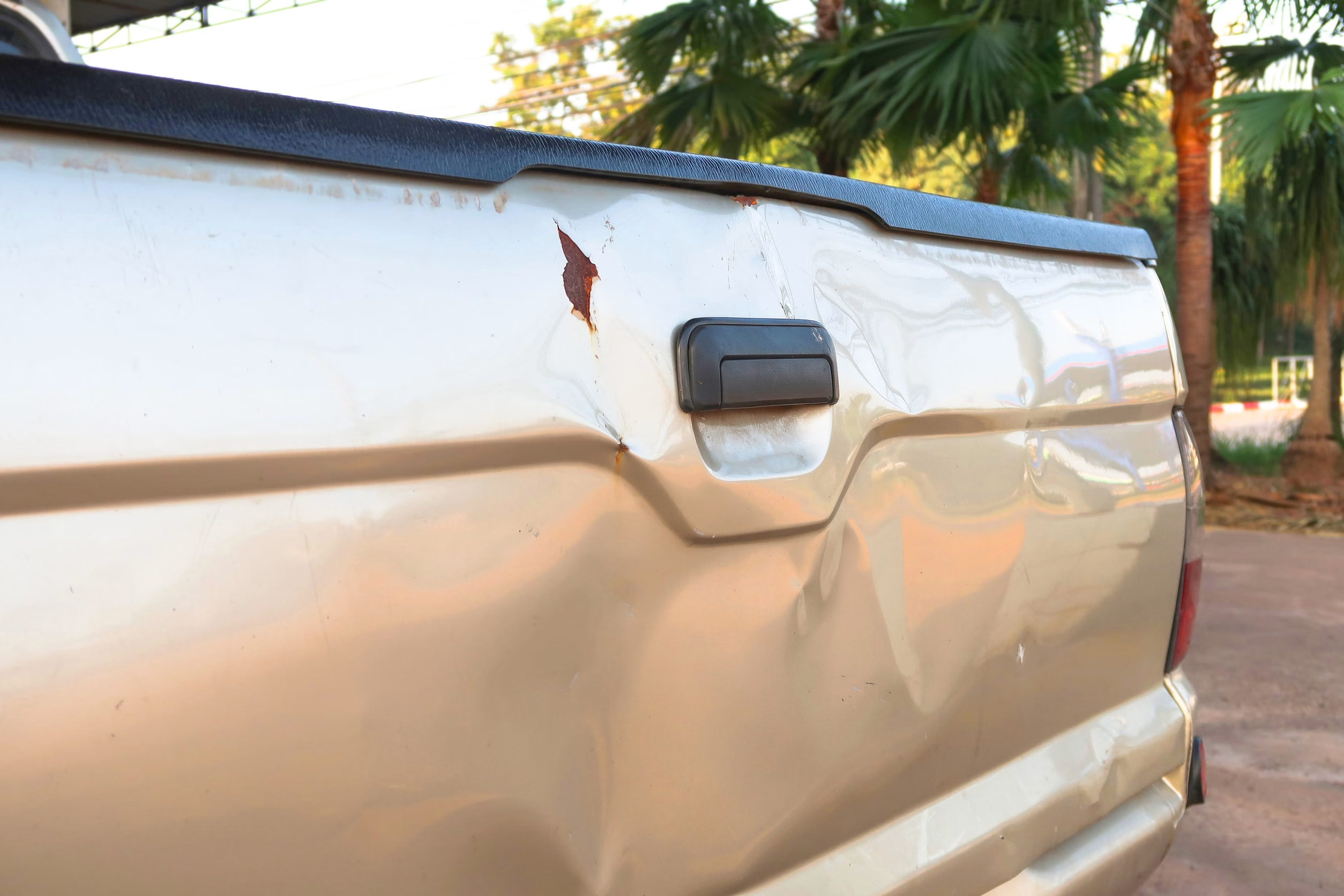
What If the Truck Dent Is Too Severe for PDR?
Not every truck dent can be repaired through paintless methods.
A severely stretched panel, major collision damage, significant paint damage, or damage requiring extensive bodywork may need conventional collision repair.
Dings & Dents of Conway states that when damage is beyond the scope of PDR, it can combine PDR with conventional repairs through its body-shop relationships.
The goal is not to force every truck dent into one repair method. The right approach depends on the actual condition of the truck.
Mobile Truck Dent Repair
For suitable repairs, mobile service can provide an additional level of convenience.
Dings & Dents of Conway offers mobile dent repair and states that many small to medium dents can be repaired at the customer’s location when an appropriate working area is available.
A garage, carport, or suitable shaded area may provide the necessary environment for certain mobile repairs.
Whether your particular truck dent can be repaired through mobile service depends on the location and severity of the damage.
[BUTTON: Ask About Mobile Dent Repair]
Truck Dent Repair After Hail Damage
Hail can leave multiple dents across a truck’s exterior. Instead of dealing with each dent individually, the entire vehicle can be inspected to identify the affected panels.
Dings & Dents of Conway offers hail damage repair and states that customers can bring their insurance estimate when seeking repairs.
If the damage is suitable for PDR, the repair can focus on restoring the affected panels while preserving the existing finish.
Truck Dent Repair for Work and Personal Trucks
A truck may be used for commuting, hauling, construction, landscaping, service calls, deliveries, or personal transportation.
Regardless of how the truck is used, dents can become increasingly noticeable over time. Repairing suitable damage can help maintain the vehicle’s appearance and prevent minor cosmetic problems from becoming an ongoing distraction.
For work trucks, keeping the exterior in good condition can also help maintain a professional appearance when arriving at customer properties or job sites.
Truck Dent Repair vs. Traditional Body Repair
Traditional body repair remains an important solution for severe damage, damaged paint, and repairs that require refinishing.
PDR takes a different approach. Instead of automatically sanding, filling, and repainting a damaged panel, the technician works to restore the existing metal while keeping the original finish intact when conditions allow.
For a qualifying truck dent, this can provide an alternative to conventional bodywork.
The best choice should always be based on an inspection of the actual damage.
Frequently Asked Questions
Can you repair dents on pickup trucks?
Many pickup-truck dents can be repaired depending on their size, location, depth, paint condition, and panel material. A technician should inspect the damage to determine whether PDR or another repair method is appropriate.
Can PDR repair a truck bed dent?
Some truck bed and bedside dents can be repaired with PDR. The repairability depends on the location, severity, panel construction, access, and condition of the paint.
Can you repair an aluminum truck bedside?
Aluminum panels can require specialized repair techniques. Dings & Dents of Conway specifically offers Aluminum Bedside Repair using its Push For Paint method for suitable damage.
Can PDR repair a large truck dent?
The size of a dent does not automatically determine whether PDR is possible. Some larger dents can be repaired when the metal and paint remain suitable for the process. The damage should be evaluated individually.
Can truck dents be repaired without repainting?
When the dent qualifies for PDR and the original paint is intact, it may be possible to repair the damage without conventional repainting. More severe damage may require traditional body repair.
Do you offer mobile truck dent repair?
Dings & Dents of Conway offers mobile dent repair and states that many small to medium dents can be repaired at the customer’s location when suitable working conditions are available.
Can hail damage on a truck be repaired?
Suitable hail dents can often be addressed with PDR. Dings & Dents of Conway also offers hail damage repair and asks customers to bring their insurance estimate when applicable.
What happens if my truck dent cannot be fixed with PDR?
If the damage is outside the practical limits of PDR, conventional body repair may be necessary. Dings & Dents of Conway states that it can combine PDR with conventional repairs when the damage requires additional bodywork.
Get Your Truck Dent Evaluated
A dent does not always mean your truck needs traditional bodywork or repainting. Depending on the damage, Paintless Dent Repair may provide an effective way to restore the panel while preserving the original finish.
Dings & Dents of Conway has more than 30 years of experience in Paintless Dent Repair and offers PDR, mobile dent repair, hail damage repair, aluminum bedside repair, bumper repair, and conventional collision repair options.
If your truck has a dent in the door, fender, bedside, tailgate, hood, or another exterior panel, contact Dings & Dents of Conway to discuss the damage and determine the appropriate repair option.